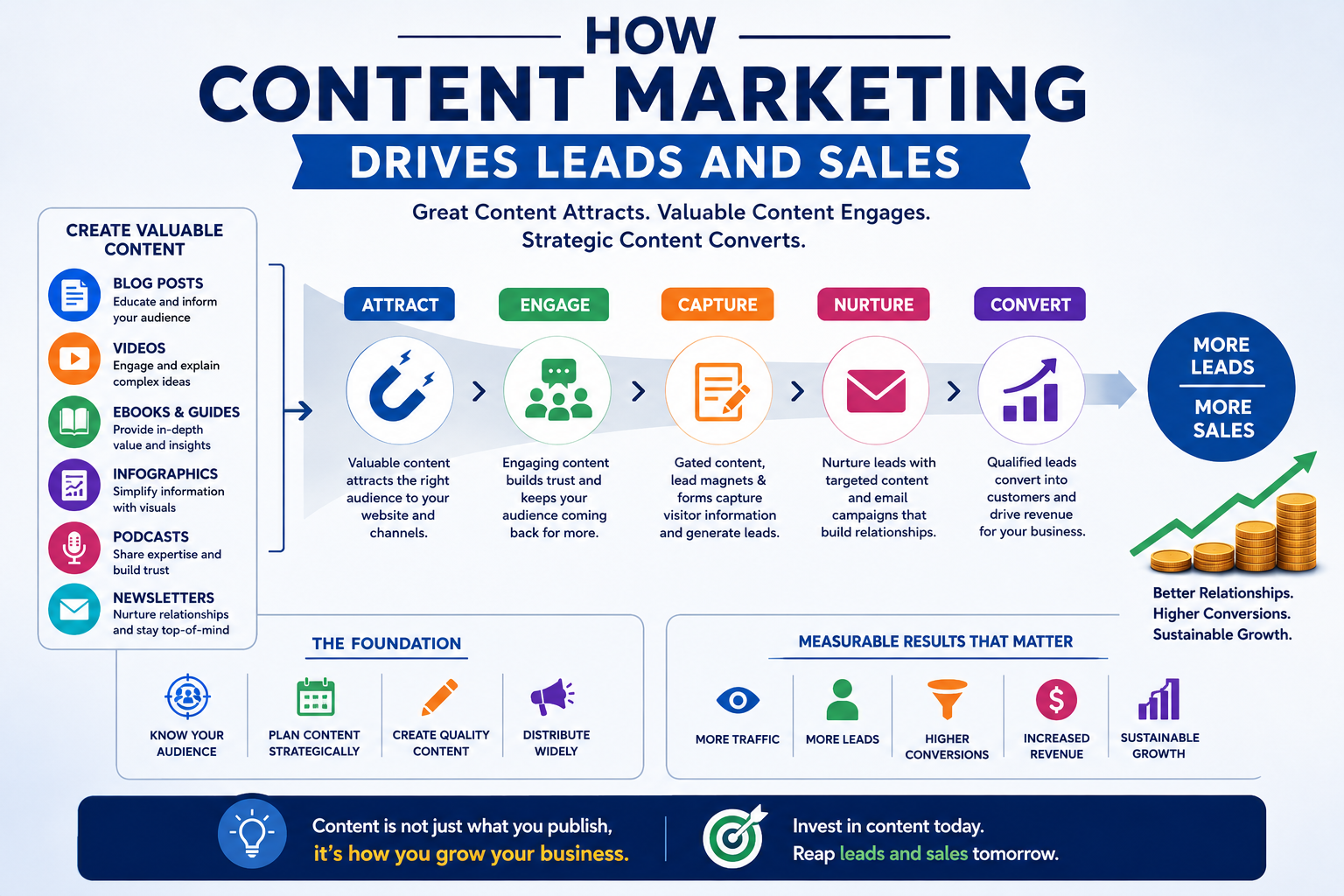
 In today’s digital landscape, customers want more than advertisements—they want valuable information that helps them make informed decisions. This is where content marketing becomes one of the most effective digital marketing strategies. By creating high-quality, informative, and engaging content, businesses can attract potential customers, build trust, generate qualified leads, and increase sales over time. Whether it’s a blog post, video, infographic, case study, or email newsletter, every piece of content plays a role in guiding customers through their buying journey.
What Is Content Marketing?
Content marketing is the practice of creating and sharing valuable, relevant, and consistent content to attract and retain a clearly defined audience. Unlike traditional advertising, content marketing focuses on educating, informing, and solving customer problems rather than directly selling products or services. The goal is to build trust, establish authority, and encourage potential customers to choose your business when they are ready to make a purchase.
Attracting the Right Audience
One of the biggest advantages of content marketing is its ability to attract targeted visitors. When businesses publish SEO-optimized blog posts, guides, tutorials, and landing pages, they improve their visibility on search engines like Google. People searching for solutions to their problems are more likely to discover your website through relevant content. This organic traffic often consists of highly interested visitors who are already looking for products or services similar to yours.
Building Trust and Credibility
Customers prefer to buy from businesses they trust. By consistently publishing helpful and informative content, your brand positions itself as an expert in its industry. Educational articles, customer success stories, frequently asked questions, and how-to guides demonstrate your knowledge and show that you genuinely care about helping your audience. Over time, this trust leads to stronger customer relationships and increased brand loyalty.
Generating High-Quality Leads
Content marketing helps businesses capture leads by offering valuable resources in exchange for customer information. Free eBooks, downloadable guides, webinars, templates, and newsletters encourage visitors to provide their contact details. These leads can then be nurtured through email marketing, personalized content, and follow-up campaigns until they are ready to become paying customers.
Supporting Every Stage of the Customer Journey
Different types of content serve different purposes throughout the buying process. Informational blogs attract new visitors, comparison articles help potential customers evaluate options, case studies build confidence, and product demonstrations encourage purchasing decisions. By creating content for every stage of the customer journey, businesses increase the likelihood of converting visitors into loyal customers.
Measuring Content Marketing Success
One of the strengths of digital content marketing is its measurability. Businesses can track website traffic, keyword rankings, engagement, lead generation, conversion rates, and customer behavior using analytics tools. These insights help marketers identify which content performs best and continuously improve their marketing strategy for better results.
Conclusion
Content marketing is one of the most powerful long-term investments a business can make. It increases search engine visibility, builds customer trust, generates qualified leads, and supports higher sales without relying solely on paid advertising. By consistently creating valuable and relevant content, businesses can establish themselves as industry leaders while attracting the right audience and achieving sustainable growth. In an increasingly competitive digital world, content marketing is not just a strategy—it is the foundation of lasting online success.