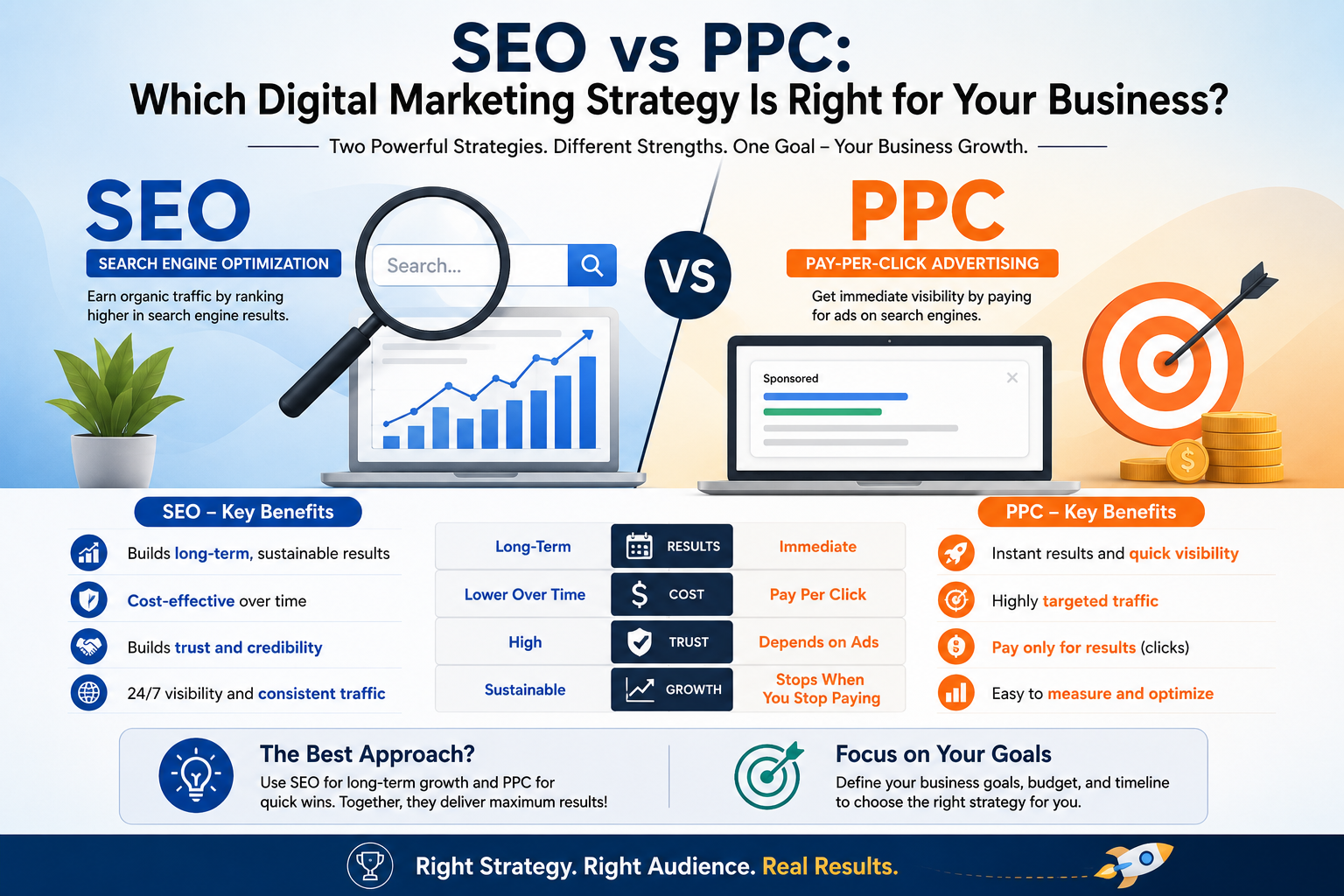
 When businesses want to increase their online visibility and attract more customers, two of the most effective digital marketing strategies are Search Engine Optimization (SEO) and Pay-Per-Click (PPC) Advertising. Both methods can generate traffic, leads, and sales, but they work in different ways and serve different business goals. Understanding the strengths of each strategy can help you decide which approach is best for your business—or whether combining both is the smartest choice.
What Is SEO?
Search Engine Optimization (SEO) is the process of improving your website so that it ranks higher in organic (non-paid) search engine results. SEO involves optimizing website content, using relevant keywords, improving site speed, enhancing mobile responsiveness, and building high-quality backlinks. The goal is to make your website more visible when potential customers search for products or services related to your business.
One of the biggest advantages of SEO is that it provides long-term benefits. Once your website achieves strong rankings, it can continue attracting visitors without paying for every click. SEO also builds trust and credibility because users often view top organic search results as more reliable than paid advertisements.
However, SEO is a long-term strategy. It usually takes several months to see significant improvements, especially in competitive industries. Consistent content creation, technical optimization, and ongoing maintenance are essential for maintaining strong rankings.
What Is PPC?
Pay-Per-Click (PPC) advertising allows businesses to display paid advertisements on search engines and social media platforms. With PPC, you pay only when someone clicks on your advertisement. Popular platforms include Google Ads, Microsoft Ads, Facebook Ads, Instagram Ads, and LinkedIn Ads.
The greatest advantage of PPC is speed. Businesses can appear at the top of search results almost immediately after launching a campaign. PPC is highly effective for promoting new products, seasonal offers, local services, and limited-time campaigns. It also provides advanced targeting options based on location, interests, demographics, devices, and customer behavior.
The downside is that traffic stops when your advertising budget ends. Without continuous investment, paid campaigns no longer generate visitors.
SEO vs PPC: Key Differences
SEO focuses on earning organic traffic over time, while PPC generates immediate paid traffic. SEO generally delivers better long-term value and higher credibility, whereas PPC offers quick visibility and faster lead generation. SEO requires patience and ongoing optimization, while PPC requires careful budget management and campaign optimization.
Which Strategy Should You Choose?
The best choice depends on your business goals. If you want long-term growth, improved search rankings, and sustainable website traffic, SEO is an excellent investment. If you need immediate results, product launches, or quick lead generation, PPC is the better option.
Many successful businesses combine both strategies. PPC provides instant visibility while SEO builds lasting authority and reduces long-term customer acquisition costs. Together, they create a balanced marketing strategy that delivers both short-term wins and long-term success.
Conclusion
SEO and PPC are not competitors—they are complementary digital marketing tools. Choosing the right strategy depends on your budget, timeline, competition, and business objectives. By understanding how each method works, businesses can create effective marketing campaigns that increase visibility, attract qualified customers, and drive sustainable growth. Whether you invest in SEO, PPC, or both, a well-planned digital marketing strategy is essential for success in today’s competitive online marketplace.